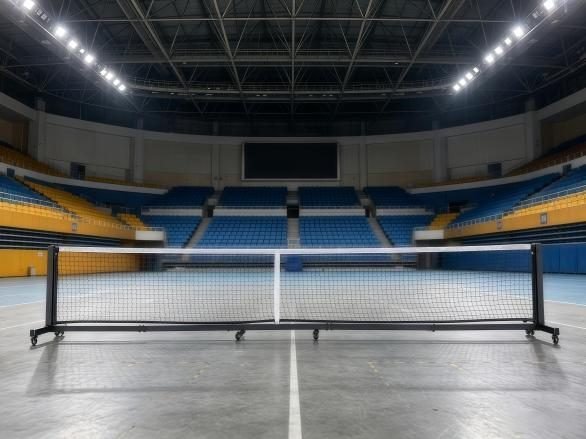
If you're a sporting goods distributor, club equipment buyer, or retailer evaluating pickleball nets for your catalog, this guide is written specifically for you. We'll cover everything from specification compliance and material selection to wholesale pricing structures, shipping logistics, and how to work directly with OEM manufacturers for better margins.
The pickleball net market is projected to grow at 12.8% CAGR through 2030, driven by new court construction (over 50,000 courts in the US alone as of 2025), school and community center adoption, and international expansion into Europe, Australia, and Asia-Pacific. For distributors positioned correctly, this represents a significant revenue opportunity over the next 5 years.
Distributor takeaway: Pickleball nets have a 18–24 month replacement cycle for commercial use (clubs, schools, parks) and strong seasonal demand spikes in spring (court prep season) and holiday Q4 (gift purchases). Plan inventory accordingly.
The Wholesale Pickleball Net Market in 2026
The market segments clearly into three channels, each with distinct buying patterns:
- Consumer/DTC (45% of volume): Individual players buying 1–2 nets for home driveway or community use. Price-sensitive ($80–$150), driven by Amazon reviews and influencer recommendations. High return rate if setup is complicated.
- Clubs & Facilities (35% of volume): Tennis clubs converting courts, standalone pickleball facilities, HOA communities, schools, parks departments. Buy 4–20 nets per order, prioritize durability and ease of setup over price. Lower return rate but longer sales cycle (RFQ-based).
- Tournament & Event (20% of volume): Tournament organizers, event rental companies, professional tour suppliers. Need tournament-grade precision, quick assembly/disassembly, and branded options. Highest margin segment but requires certification and references.
Portable vs Permanent vs Multi-Sport: Which to Stock?
🔧 Portable Nets
- Setup time: 5–15 minutes (1 person)
- Frame: Interlocking steel/aluminum sections
- Base: Weighted plates or fillable containers
- Best for: Home use, clubs sharing courts, events
- Retail price: $80 – $250
- Inventory turn: Fast (high volume category)
⚓ Permanent Systems
- Installation: In-ground concrete anchors required
- Frame: Heavy-gauge steel posts (permanent)
- Net: Replaceable (net wears faster than posts)
- Best for: Dedicated facilities, country clubs
- Retail price: $400 – $1,800
- Inventory turn: Slower but higher ticket
Multi-sport nets (adjustable height for pickleball/badminton/tennis) occupy a growing niche, particularly for schools and community centers with multi-purpose courts. They command a 20–30% price premium over single-sport equivalents but appeal to budget-conscious buyers who want versatility. Consider stocking 1–2 SKUs alongside your core portable lineup.
Distributor Product Mix Recommendation
| SKU Type | % of Inventory | Why |
|---|---|---|
| Economy Portable (steel frame) | 35% | Volume driver, entry-level price point, high turnover |
| Premium Portable (aluminum/wide-base) | 35% | Better margins, club/facility buyers, brand differentiator |
| Permanent System (posts + net) | 15% | High-ticket, facility construction projects |
| Multi-Sport / Adjustable | 10% | Niche but growing, school/community channel |
| Replacement Nets Only | 5% | Recurring revenue, low SKU complexity |
USAPA Specifications Explained
If you're selling into the US market (or any market following USAPA standards), understanding the official specifications is non-negotiable. Selling non-compliant nets damages your reputation and leads to returns when customers discover they can't be used in sanctioned play.
| Specification | USAPA Requirement | Why It Matters |
|---|---|---|
| Net Width | 22 feet (6.71m) | Matches official court width exactly |
| Net Height (Sides) | 36 inches (91.4cm) | Standard at sidelines |
| Net Height (Center) | 34 inches (86.4cm) | Allows for slight sag — must not dip below 34" |
| Mesh Size | ≤ 1.5 inches (small enough to stop ball) | Prevents balls from passing through net |
| Top Tape | 2 inches wide, white preferred | Visibility for players judging shots |
| Center Strap | Required, adjustable | Maintains correct center height |
Note: International markets (IFP — International Federation of Pickleball) follow nearly identical specs. One net design can serve US, Canadian, European, and Asia-Pacific markets with minor packaging/language changes.
Material Quality Checklist
Not all pickleball nets are built equal. As a distributor, your reputation depends on the quality of products you supply. Here's what separates a net that lasts 3 seasons from one that fails in 3 months:
Frame Components
- Tubing material: Powder-coated steel (standard, rust-resistant) vs. aluminum (premium, lightweight, corrosion-proof). Look for 1.0–1.5 inch outer diameter with ≥1.2mm wall thickness.
- Coating: Electrostatic powder coating (superior to spray paint) prevents chipping and rust. Black or dark green is most common; custom colors available via OEM.
- Connection system: Push-button interlocking joints (faster setup, more secure) vs. slip-fit sleeves (cheaper, can loosen over time). Button-lock is worth the marginal cost increase.
Net Fabric
- Material: UV-resistant polyethylene (PE) or polypropylene (PP). Avoid untreated nylon (degrades in sun within 6 months).
- Cord diameter: 2.0–2.5mm for durability. Thinner cords stretch and break faster.
- Border tape: Vinyl-coated polyester binding around all edges. Double-stitched corners prevent fraying.
- Knotting: Knotted mesh (each intersection secured) outlasts knotless/bonded mesh significantly.
Base / Anchor System
- Portable bases: Minimum 10kg (22 lbs) per side for stability in wind. Steel plate bases (permanent weight) or PE containers (fillable with sand/water).
- Permanent posts: Galvanized steel with concrete footings. Should include ground sleeves for easy net/post removal if needed.
Wholesale Pricing Tiers & Margin Analysis
Pricing transparency helps you plan your catalog strategy. Below are typical FOB (factory door) wholesale prices from qualified OEM manufacturers. Your landed cost will add shipping, duties, and handling on top.
| Product Category | FOB Price Range | Suggested Retail | Gross Margin |
|---|---|---|---|
| Economy Portable Net (Steel) | $18 – $32 | $79 – $129 | 55–68% |
| Premium Portable Net (Aluminum/Wide Base) | $38 – $65 | $149 – $249 | 58–72% |
| Permanent Post System (Posts Only) | $45 – $90/set | $199 – $349 | 58–74% |
| Replacement Net (Fabric Only) | $5 – $12 | $29 – $49 | 59–76% |
| Multi-Sport Adjustable Net | $42 – $78 | $169 – $279 | 57–72% |
Volume tier discounts typically apply at these thresholds:
- 50–99 units: Standard FOB pricing
- 100–299 units: 5–8% discount
- 300–499 units: 10–14% discount
- 500+ units: 15–20% discount + payment terms available
Shipping & Logistics for Bulk Orders
Understanding shipping economics is critical for accurate costing. Here's a practical breakdown:
By Sea (Most Cost-Effective for 100+ Units)
- Transit time: 25–35 days (China → US West Coast); 30–40 days (China → Europe)
- Cost per unit: ~$3–$6 (depending on CBM/volume)
- Best for: Replenishment orders, planned inventory builds, 200+ unit quantities
- Packaging tip: Flat-pack/knocked-down design reduces CBM by 40–60% vs. assembled, dramatically cutting freight cost per unit
Air Freight (Speed Priority)
- Transit time: 5–10 days
- Cost per unit: ~$15–$25
- Best for: Rush orders, first samples, restocks before peak season
Courier (Small Orders)
- Transit time: 3–7 days (DHL/FedEx/UPS)
- Cost per unit: ~$12–$20 (under 50 units)
- Best for: Sample orders, initial test orders under $2,000 value
Pro tip for distributors: Always request a DDP (Delivered Duty Paid) quote for your first order so there are no surprise customs charges upon arrival. Once you understand the duty rates (typically 4–8% for sporting goods under HS code 9506), switch to FOB/CIF for ongoing orders and handle clearance through your own broker for better rates.
Quality Control: What to Inspect Before Accepting Shipment
Whether you inspect in-person at the factory or upon receipt at your warehouse, this checklist catches 90% of common defects:
- Dimension accuracy: Measure net width (must be 22'), side height (36"), center height (34"). Allow ±0.5" tolerance max.
- Frame integrity: Check all weld points for cracks, verify coating has no chips/peeling, test all connection joints lock securely.
- Net tension: Set up the net and verify it reaches proper tension without excessive sag. Center strap must hold position.
- Base stability: Apply lateral force to simulate wind load. Net should not tip easily. Weighted bases should meet stated kg spec.
- Visual defects: Check for rust spots, fabric tears, loose stitching, missing components (straps, clips, instructions).
- Branding accuracy: If custom logo/printing ordered, verify placement, color match, and spelling against approved artwork.
- Packaging condition: Boxes should be undamaged, all hardware bags present, instruction manual included.
Acceptance threshold: Most distributor contracts specify ≤2% defect rate acceptable. Above that, factory should replace at their cost. Document everything with photos/video before signing off.
Working with an OEM Manufacturer: Benefits & Process
For distributors looking to maximize margins and differentiate from competitors carrying identical white-label products, partnering directly with an OEM manufacturer offers compelling advantages:
Why Go OEM Instead of Trading Company?
| Factor | OEM Factory Direct | Trading Company |
|---|---|---|
| Price | 15–30% lower (no middleman markup) | Includes 15–30% margin layer |
| Customization | Full control (design, materials, branding) | Limited to pre-set options |
| Communication | Direct to engineering/production team | Sales relay (info loss risk) |
| Problem Resolution | Factory accountable, faster response | Blame-shifting between factory/trader |
| MOQ Flexibility | Negotiable based on relationship | Fixed, less flexible |
| Lead Time Visibility | Real-time production status | Limited visibility |
The OEM Partnership Process
Inquiry & Quotation (Days 1–3)
Send your product requirements (specs, target price point, annual volume estimate, target market). Receive detailed quotation with FOB pricing, MOQ, lead time, and customization options.
Sample Evaluation (Days 4–18)
Order 1–2 samples (cost: $30–$80 each + shipping). Test thoroughly. Request modifications if needed. Approve final "golden sample" that becomes your production standard.
Deposit & Production (Days 19–44)
Pay 30–50% deposit. Factory produces order (15–25 days typical). Request in-progress photos at key milestones (welding complete, coating done, net attached, packing started).
QC Inspection & Balance Payment (Days 45–50)
Third-party inspection (optional, ~$200–$400) or self-inspection photos/video. Confirm QC pass. Pay remaining balance. Factory releases shipment documents.
Shipping & Delivery (Days 51–85)
Goods ship via chosen method. Track to destination port/door. Clear customs. Inspect upon receipt against golden sample standard.